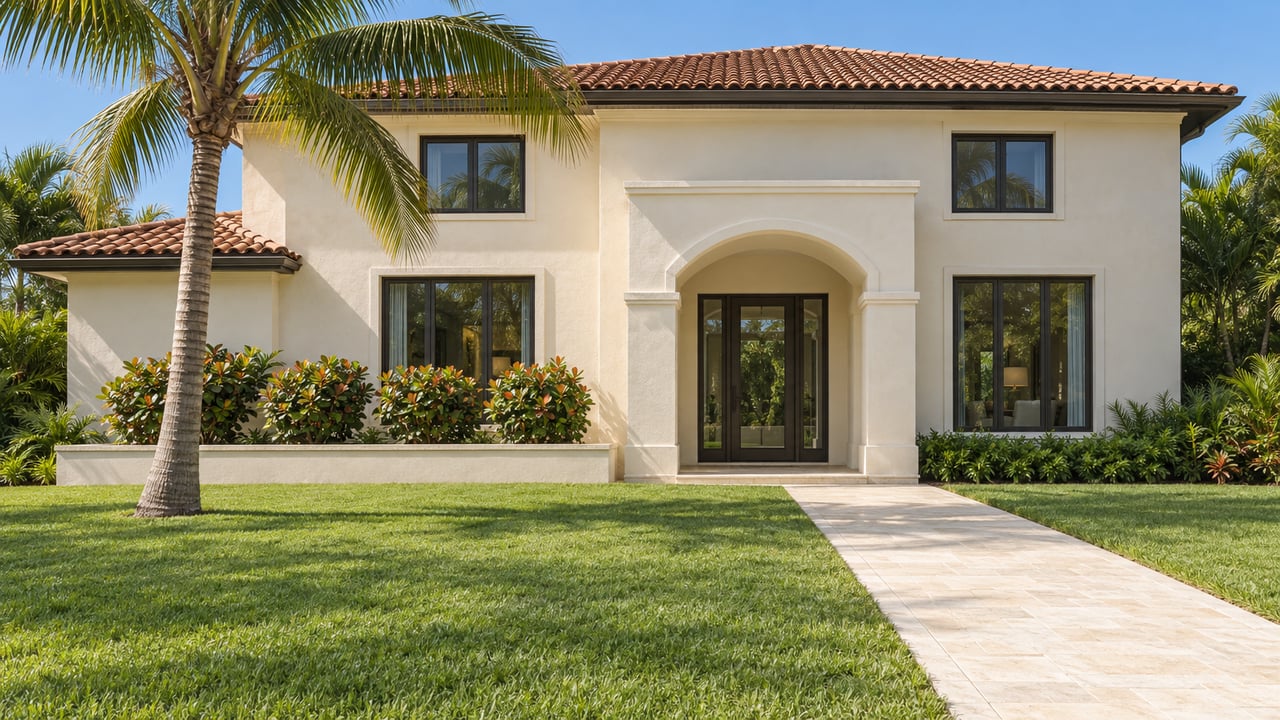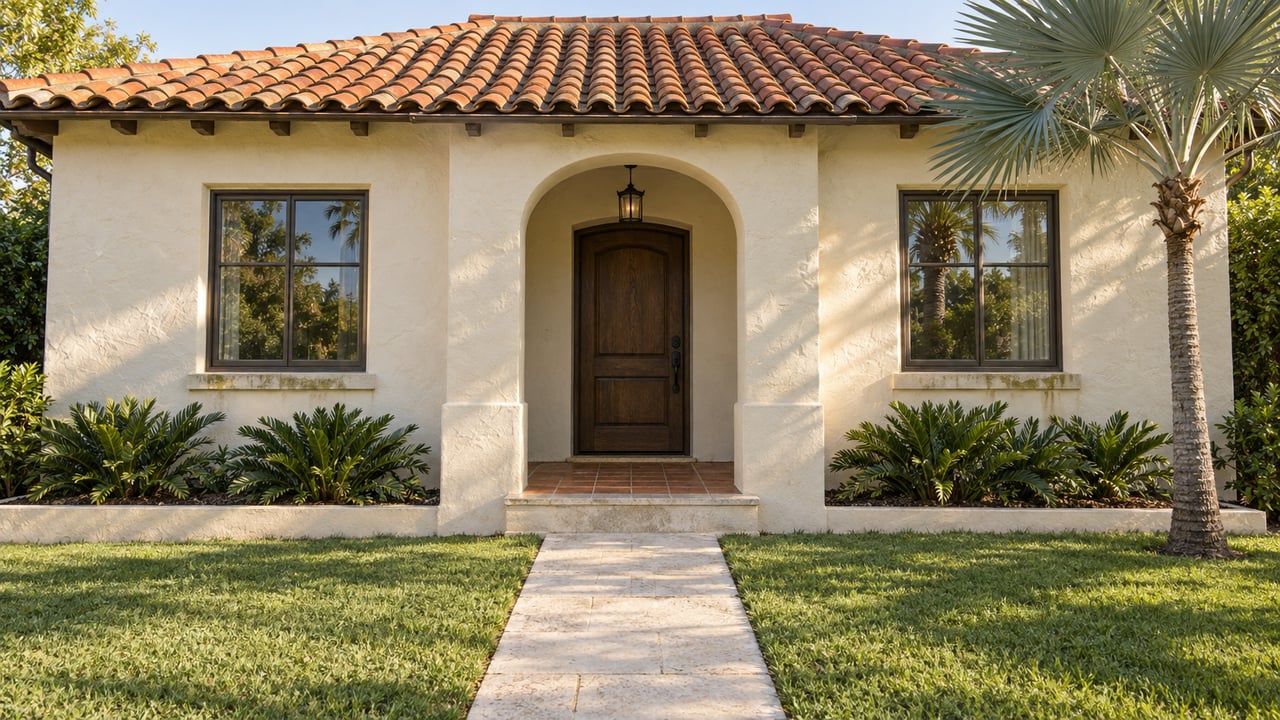
Buyers who fall for a 1920s Mediterranean Revival in El Cid or a Craftsman bungalow in Grandview Heights tend to focus on one date: the day they close. That date determines financing, possession, and when the moving truck shows up. It does not determine what you're allowed to do to the house once you own it. That decision runs on a separate clock, set by the City of West Palm Beach's Historic Preservation Board, and it starts long before your first design meeting with a contractor.
West Palm Beach maintains 18 locally designated historic districts and 46 individually designated sites, and any exterior change inside one of them, from a new addition to a replaced roofline, requires a Certificate of Appropriateness before a building permit is issued. Understanding how that process actually moves, not just that it exists, is the difference between a renovation that stays on budget and one that stalls for months after you've already closed.
The board decides before the closing table does
The Certificate of Appropriateness, or COA, is a design approval that has to happen before you can pull a standard building permit for exterior work in a historic district. Steve Cury Construction says minor changes can be handled by preservation staff administratively. The Historic Preservation Board meets monthly.
That split matters for timing. A staff-level approval can move in weeks. A board-level approval means submitting drawings and material specs in advance of a scheduled meeting date, then living with whatever conditions the board attaches, which this year have included everything from material substitutions to structural details tied to flood elevation rules. If your renovation budget assumes a contractor can start the week after closing, a board-level COA can turn that into a multi-month wait before the first permit is even filed.
Three files from this year show how it actually plays out
The board's 2026 case list gives a concrete sense of what "board-level" means in practice.
Citizen Portal reports that a two-story addition at 212 Dyer Road to a 1940 minimal-traditional house went through months of revision before approval, with the applicant's attorney telling the board they removed a Palladian window and reduced a balconet to satisfy staff and board concerns before the motion finally carried.
The same Citizen Portal report says that at 612 Park Place, the board approved reducing a deteriorated two-car Mission Revival garage to a single-car structure, which required a special exception for a three-foot front extension into an existing nonconforming side yard, the kind of granular zoning interaction that only shows up once plans are actually in front of the board.
Citizen Portal reports that a proposed new single-family residence at 368 Washington Road needed both a side-setback variance and a COA. The architect, Rick Gonzalez of Reg Architects, removed a previously proposed tower from the design and raised the finished floor to meet FEMA freeboard requirements before the board approved it with twelve separate conditions, including a rule that the rooftop railing could not be built of glass.
None of these were denials. All three eventually got approved. But all three took real time and real design revision to get there, which is the pattern a buyer needs to plan around, not the exception.
| Review level | Typical trigger | Who reviews it | 2026 example |
|---|---|---|---|
| Administrative (staff) | Minor changes | Historic Preservation staff | Minor changes handled administratively |
| Full board hearing | Work sent to the board | Historic Preservation Board (monthly meetings) | 212 Dyer Road addition, 612 Park Place garage reduction, 368 Washington Road new construction |
Tax questions to ask before a renovation
Before closing on a house that needs substantial rehab, ask the city's Historic Preservation Office about tax considerations. Buyers who plan to renovate should have that conversation before they finalize a scope of work, not after.
What the median price on your phone doesn't tell you
Search for El Cid home values and you'll find numbers that look alarming or wildly generous depending on which site you land on. As of August 2026, one tracked median sale price for El Cid showed a year-over-year decline of over 50 percent. Read that literally and it looks like the neighborhood cratered. It didn't. El Cid is a small district, and a market snapshot in June 2026 was built on roughly eight recent closings. In a pool that thin, one or two high-dollar sales dropping out of the trailing twelve months can swing a median more than any real shift in value.
That's why price per square foot tends to be the steadier read in a neighborhood like this, and why a single asking-price figure or a single closed-sale figure should never be treated as the whole story. Separate El Cid listings as of early 2026 showed prices ranging from under $1.3 million to nearly $22 million for houses inside the same historic boundary, a spread wide enough that "the median" is describing very different houses depending on which ones happened to close that month.
The price band shifts fast once you cross out of El Cid, too. Flamingo Park and Grandview Heights sit just southwest of El Cid, share the same design-review rules, and were running roughly $830,000 to just over $1 million through early 2026 depending on the valuation method used, a fraction of El Cid's multimillion-dollar range despite being a short walk from the same downtown core. Anyone comparing "West Palm Beach's historic districts" as one market is comparing four or five distinct markets that happen to share a design review board.
A rezoning fight is moving through City Hall this fall
There's a second clock running that matters specifically to anyone buying near the historic core right now. The city's Downtown Master Plan update, a code revision known as CRC26-03, spent months in front of the Historic Preservation Board and the Downtown Action Committee this year. Citizen Portal reports that the plan creates new core, transition, and edge subdistricts.
On September 10, 2026, the Downtown Action Committee voted 3 to 1 to advance the plan after removing proposed 25-story waterfront towers from the draft. The first reading in front of the City Commission is scheduled for October 26, 2026, with final approval expected in January 2027. The plan's stated goal is preserving the historic core while allowing more housing at its edges.
What to confirm before you write the offer
- Confirm whether the house is a contributing or non-contributing structure within its historic district. That status can affect what design review requires and what incentives apply, even for two houses on the same block.
- Ask the seller or listing agent whether the property has any COA history, pending or completed, and request copies of board correspondence if any exists.
- If you're planning renovation work, budget for a board-level review timeline, not a staff-level one, until you know which category your project falls into.
- If the rehab is significant, talk to the Historic Preservation Office about the ad valorem exemption before you sign a contractor agreement, not after.
A couple of questions that come up often
Does the ad valorem exemption apply to condo units inside historic buildings, or only single-family homes? It's worth confirming directly with the city's Historic Preservation Office for any given building before assuming it applies.
What if my house is inside a historic district boundary but isn't a "contributing" structure? Non-contributing structures still sit inside the same review boundary, and exterior changes can still trigger design review, but the standards applied and the flexibility given can differ from a contributing property. This is exactly the kind of detail that's worth confirming with preservation staff before you assume your renovation plans are automatically feasible.
Buying in a historic district here isn't a reason to hesitate. It's a reason to sequence things correctly, and that's precisely the kind of detail that separates a smooth close from a frustrating one. If you're looking at a property in El Cid, Flamingo Park, Grandview Heights, or Old Northwood and want a clear read on what a specific house's history means for your renovation timeline and budget, Scott Correale can walk through it with you before you write the offer. Schedule a Private Consultation to start that conversation.
This article is general information, not legal, tax or financial advice. Consult a qualified professional about your situation.