If you already live between the Intracoastal and the Atlantic on this two-mile sliver of A1A, you know the calendar shifts in July. The seasonal crowd has thinned, the light gets harder, and the town's actual working season begins. Nests appear above the wrack line at Hammock Park. The inlet fills with mullet. A quiet stack of ordinances and hearings moves through Town Hall while everyone else assumes the barrier island is asleep.
The thesis is simple. Summer is not Ocean Ridge's off-season. It is the season the town is most itself, and the residents who read it well get more out of the next ninety days than the ones who wait for October.
The July 1 deadline you probably already met
Ocean Ridge passed Ordinance 2026-01 earlier this year, folding a hurricane-prep habit into the land development code. All coconut trees in Town are required to be trimmed annually by July 1 in preparation for hurricane season, with the Commission citing wind damage and personal-injury risk as the reason for making it an annual rule rather than a suggestion.
A few things worth pulling out of that ordinance if you have not read it in full:
- The tree code more broadly still requires a permit to plant, remove, or move most trees, though trees destroyed or severely damaged by storm, fire, freeze, disease, lightning, or vandalism are exempt from the permit requirement.
- "Hat-racking" pruning — flat-cutting the top or sides of a tree, severing leaders, or stubbing off mature wood — is prohibited under the same section for any tree that would otherwise need a permit.
- Right-of-way and utility-easement trimming falls under a "no fee" permit issued by the town manager, which is the mechanism most residents will actually touch when a sabal or a royal starts crowding the drive.
Read together, the code rewards residents who prune early, prune correctly, and document. Waiting until a named storm is on the cone is both a safety problem and a compliance problem.
What is happening on the dune right now
Sea turtle nesting is not a background fact here. Palm Beach County beaches carry more sea turtle nests per mile than anywhere else in the United States, producing roughly two million hatchlings each year, and Ocean Ridge sits inside the densest stretch of that coastline. The season runs from March 1 through October 31, which means July and August are peak.
The rules residents most often trip over are the ones about light and beach behavior. Guidance from Boynton Beach's Oceanfront Park, which shares this dune system with us, is worth internalizing: never approach or touch a nesting sea turtle, keep your distance, remain quiet, and keep all lights off, including flash photography and cell phones. Dig holes only below the high tide line in hard-packed sand, fill them back in before you leave, and knock down sand castles so hatchlings and nesting females aren't trapped by them. If you have oceanfront property, that guidance extends to your exterior lighting and any deck fixtures visible from the dune.
Residents who want to see nesting up close without doing it wrong should know that Sea Turtle Adventures is based right here in Ocean Ridge and Gulf Stream and can be reached at 561-704-5911. It is one of the FWC-authorized organizations for guided walks on this stretch.
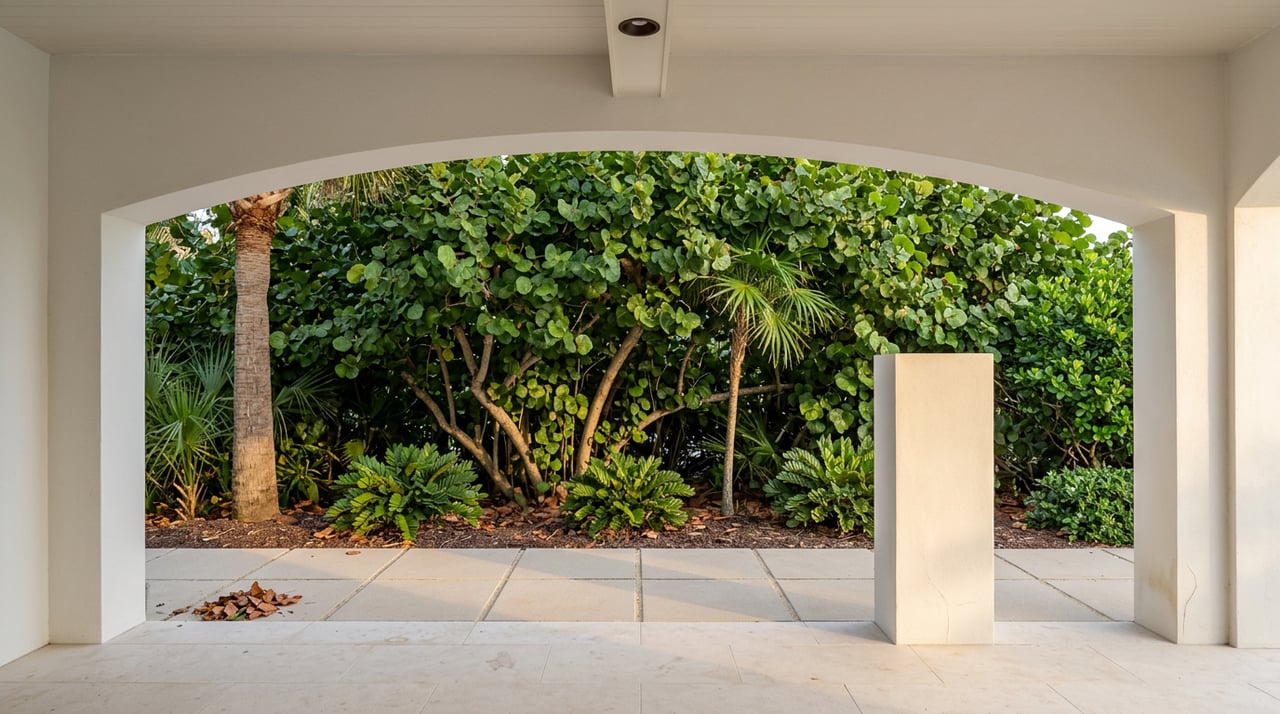
The physical setting for most of this activity is Ocean Ridge Hammock Park, and it repays a closer look than the average resident gives it. The park is a small 8.54-acre beachfront park buffered from A1A by a thick coastal forest of massive sea grape trees mixed with gumbo limbo, paradise trees, sabal palms, and strangler figs. Its dune is the best stretch of natural beach dune in the vicinity, which is why nesting activity concentrates here. If you have out-of-town family visiting and want to explain why the town resists redevelopment pressure along the ocean side, that dune is the argument.
Practical notes most residents forget:
- The park has a small lot on the west side of A1A, a shower, and the boardwalk path, but no drinking water, no restrooms, and no lifeguards; the nearest facilities are at Boynton Beach's Oceanfront Park immediately south.
- It is open sunrise to sunset every day of the year, admission is free, and parking is tight.
- Pets are not permitted, which is the single most common friction point with new residents who assume any barrier-island beach allows leashed dogs.
Your five-minute beach map, for when the Hammock lot is full
| Spot | What it gives you | What it lacks |
|---|---|---|
| Ocean Ridge Hammock Park | Natural dune, hammock trail, quiet sand, shower | Restrooms, lifeguards, generous parking |
| Boynton Oceanfront Park (immediately south) | Restrooms, drinking water, lifeguards, larger lot | Solitude |
| Gulfstream Park (a few minutes south on A1A) | Additional county beach access | Same dune character as Hammock, minus the trail |
| Ocean Ridge Natural Area, Corrine Street | Roughly a mile south off A1A on Corrine Street; hammock and scrub without the beach | Ocean access |
The point is not that these are undiscovered. It is that a resident who mentally strings them together as one linked system gets a working set of options on a July Saturday when one lot is inevitably full.
The inlet, read correctly
The cut at the north end of town is officially the South Lake Worth Inlet, though almost everyone still calls it the Boynton Inlet. It is an artificial cut through the barrier beach connecting the south end of the Lake Worth Lagoon to the Atlantic, 130 feet wide and 6 to 12 feet deep. Those dimensions matter for two very different reasons.
For anglers, the inlet is a summer engine. It is a productive fishing area known for snook, with mullet and pilchard available for bait. From the jetties on either side, residents pick up snook, pompano, and Spanish mackerel through the warmer months. The inshore run around the structure adds tarpon, jack crevalle, and barracuda in July and August.
For anyone with a boat at a private dock or a slip at Boynton Harbor Marina across the Intracoastal, the same dimensions carry a warning. The inlet is infamously tricky to navigate, particularly in bad weather conditions. A narrow, shallow, current-driven cut sitting in the tightest part of the barrier island demands respect on an outgoing tide with an east wind. Residents who cross it weekly develop a feel for the window; residents who cross it three times a year should not treat it like an ordinary channel.
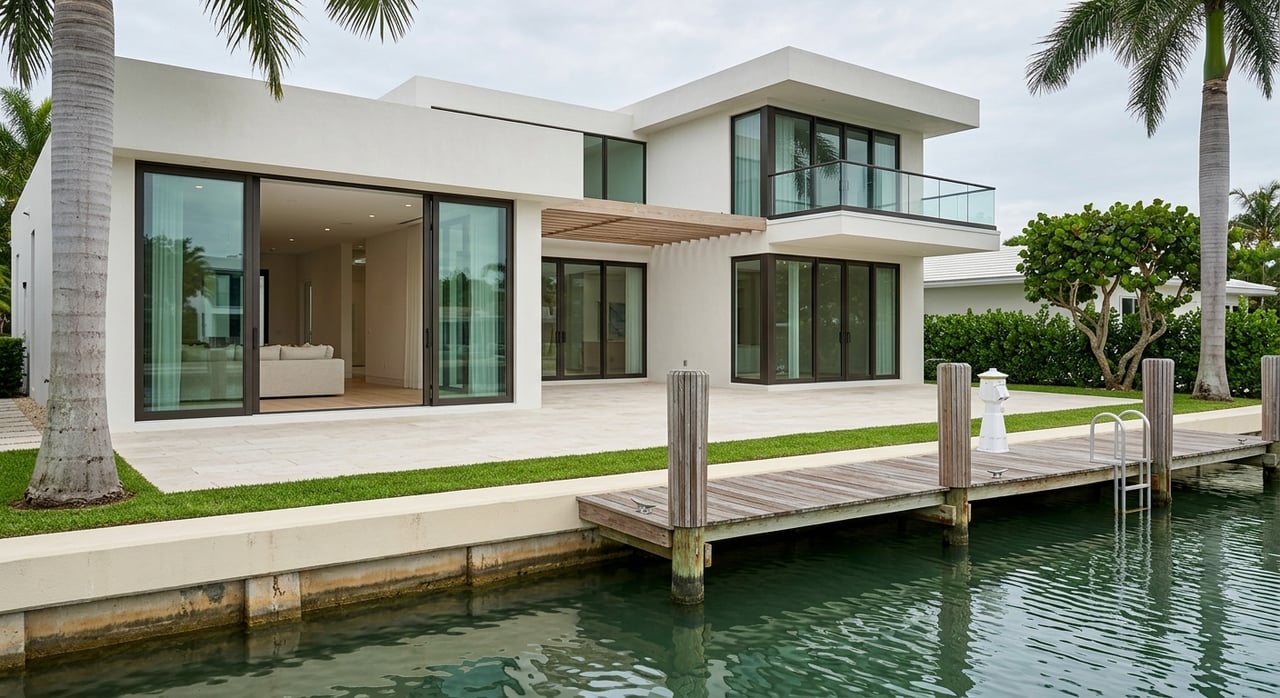
The offshore payoff, for the boaters who do get out, is unusual. Deep-sea fishing off Boynton Beach begins almost immediately after leaving the inlet, with the Gulf Stream about 15 minutes out. That short run is the reason so many Ocean Ridge houses were designed with the dock as the front door.
On the town agenda
The other thing residents underread in summer is the civic calendar. Two items from the past sixty days are worth flagging.
First, a public hearing was set for the June 1, 2026 Town Commission meeting at 6:00 p.m. regarding 6849 N Ocean Blvd, the Ocean Club. Whether or not you have a direct sightline to that address, decisions about coastal-side properties on A1A tend to establish quiet precedents that affect everyone in town. Legal notices are posted on the county's site if you want to track filings before they hit the Commission agenda.
Second, an earlier planning item this year is a useful window into what current construction looks like on Sabal Island. A land development permit application from Courchene Development Corp. proposed a new 3,754-square-foot two-story single-family home with three full baths, a half-bath, a two-car garage, a swimming pool, and a covered patio at 27 Sabal Island. The number to hold in your head is 3,754 square feet. That is the current shape of a new-build on one of the town's most sought-after island lots, and it is a useful baseline when older neighbors ask what "the new houses" actually are.
Town Hall itself has been under maintenance. The roof replacement began in May, with construction expected to wrap within about a week, weather permitting. Residents heading in for a permit or a records request should confirm hours before showing up.
A resident's short list for the rest of summer
- Confirm your coconuts are trimmed and photograph them dated, in case a hurricane touches the county before October.
- Kill or shield any exterior lighting visible from the dune between now and the end of October. This is both a courtesy to nesting turtles and a practical way to avoid a code complaint.
- Pick your two beach access points. Hammock Park for solitude and dune; Oceanfront Park immediately south when you need restrooms or a lifeguard.
- Learn the inlet's tide window if you keep a boat. If you don't, know which day the mullet run so you understand why traffic on A1A slows near the jetty.
- Skim the Town Commission agenda before each meeting. Ocean Club and Sabal Island decisions this year will shape what your street looks like five years from now.
Summer on this barrier island rewards the resident who reads it as a working month rather than a holding pattern. The dune is doing something. The inlet is doing something. The Commission is doing something. None of it is loud, and all of it matters if the address on your driver's license is between the bridge and the ocean.
If you own here and would like a private, design-informed conversation about how the current cycle of new construction on Sabal Island, Inlet Cay, and the ocean side is shaping values on your specific street, Scott Correale is available for a confidential consultation. Schedule a Private Consultation to review your property in the context of what the barrier island is actually doing this summer.